
Budget has laid emphasis on increasing social spends

'It has also outlived its initial purpose of reducing physical gold imports.'


'Ek baar aap GST dekh lo!' - Prime Minister Narendra Modi's gentle nudge to Finance Minister Nirmala Sitharaman in December last year sparked the beginning of a mammoth exercise to overhaul the tangled goods and services tax regime. And the final outcome is a significantly simplified system with lower tax rates and easier compliance for businesses.

The ministry sought to allay the rating agency's concerns and said economic growth was on an upward swing.

There has been no discussion so far on cutting Plan expenditure, the Planning Commission said on Thursday even as it asked states to maintain fiscal discipline.
Economist Arvind Panagariya has also argued for loosening deficit targets to boost capital spending

This Budget is an interesting cocktail of growth orientation with inclusiveness and fiscal prudence. When one looks beyond the numbers, at the overall direction, there are distinct trends.
Government plans to bring down the combined fiscal deficit of the Centre and states by 5-6 per cent through higher tax mobilisation and lowering interest outgo

The finance minister's assertion that industry should not expect any spectacular announcements in the 2024 interim Budget suggest that the electoral imperatives of more tax concessions or higher expenditure on welfarist programmes could be far less pronounced than they were before the 2019 interim Budget, expects A K Bhattacharya.

With the fiscal deficit target staring at the government, the FY25 Budget has limited expenditure options, points out A K Bhattacharya.
'Karnataka's finances are much healthier than the Union government's, which is indebted to nearly twice the extent of the state.'
The global rating agency has, however, cautioned that India's fiscal position remains 'weak'.

Prime Minister Narendra Modi had announced a relief package of Rs 20 lakh crore or about 10 per cent or GDP last week. However, many of the measures unveiled have been in the form of moves like loan guarantees which do not entail an immediate fiscal cost.
The challenge for the RBI in 2024 is likely to be less about containing elevated inflation and more about curbing excessive financial market exuberance and a 'problem of plenty', notes Sajjid Chinoy, Chief India Economist JP Morgan.

'Consider 40% to 50% in equities, 10% in gold as a hedge, and the remaining 30% to 40% split between multi-asset funds and hybrid funds.'

Finance Minister Nirmala Sitharaman is likely to hold pre-budget consultations with industry chambers on June 20, sources said. The budget for 2024-25 fiscal is likely to be presented in Parliament in the second half of July. Industry sources said the pre-budget consultation with Sitharaman would be preceded by a meeting with Revenue Secretary Sanjay Malhotra on June 18.

United States President Donald Trump slammed Elon Musk after he formed a new political party, terming the move as 'ridiculous' and saying the tech billionaire has gone 'completely off the rails'.

Dr Manmohan Singh first embossed himself on the national consciousness when as India's finance minister he flagged off economic reforms which changed this nation forever.
Sitharaman exhorted the states to work together with the Centre, stating that while the Union government sets the direction of economic growth, it is for the states to ensure effective implementation on the ground.
International Monetary Fund has warned that large fiscal deficit and public debt was hampering India's economic growth, which is slated to go up by 1.0 per cent to 5.5 per cent this fiscal in the face of good monsoon.
Analysts and the central bank remain concerned about widening oil subsidies.

To those who ask, "Is all this really worth it? Why can't domestic demand fill the gap?", it is important to remind them that only 13 economies since the Second World War have grown at 7 per cent or more for 25 years -- like India needs to. They all had one thing in common: Strong export growth underpinned by strong global engagement, explains Sajjid Z Chinoy.

The fiscal deficit, as per the survey, deteriorated to 5.8 per cent of the GDP as compared to 3.4 per cent for 2018-19 estimated in the interim Budget.
The government will have to enhance economic activities if it wants to control fiscal deficit.

Now that the economy is growing at a higher-than-expected rate, it is time to accelerate the pace of fiscal consolidation, and the Budget could be a good starting point, argues Rajesh Kumar.

India's merchandise exports rose by 9.1 per cent to $38.13 billion in May even as the trade deficit widened to a seven-month high of $23.78 billion during the month, according to government data. Healthy growth in sectors, such as engineering, electronics, pharmaceuticals, textiles and plastics helped register growth in exports despite global economic uncertainties.

United States tech billionaire Elon Musk said he has formed a new political party to give Americans their freedom back, after a dramatic falling out with Donald Trump.
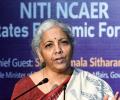
'Each state is unique, but when it comes to finance, the fundamentals cannot be different.'
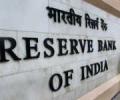
Country's central bank has been vocal on the build-up of the fiscal deficit.

If the government cuts wasteful expenditure as it is trying now, the deficit would at most fall to 8 per cent, not less than that.
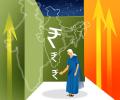
S&P Global Ratings on Wednesday upgraded India's sovereign rating outlook to positive from stable while retaining the rating at 'BBB-' on robust growth and improved quality of government expenditure. S&P said it could upgrade India's sovereign rating in the next 2 years if the country adopts a cautious fiscal and monetary policy that diminishes the government's elevated debt and interest burden while bolstering economic resilience.

'If our Budget allows, we may implement both measures -- making income up to Rs 10 lakh tax-free and introducing a 25 per cent slab for income between Rs 15 lakh and Rs 20 lakh.'
Finance Minister Arun Jaitley said the government would take bold decisions and pursue path of fiscal prudence to revive economy.

The upcoming Union Budget for Financial year 2012-2013 has importance more than what is ordinarily attributed to this already very critical annual event, says Sandesh Kirkire.

Chidambaram said the stimulus package has left several sections like the poor, migrants, farmers, labourers, workers, small shopkeepers and middle class high and dry.
